


.
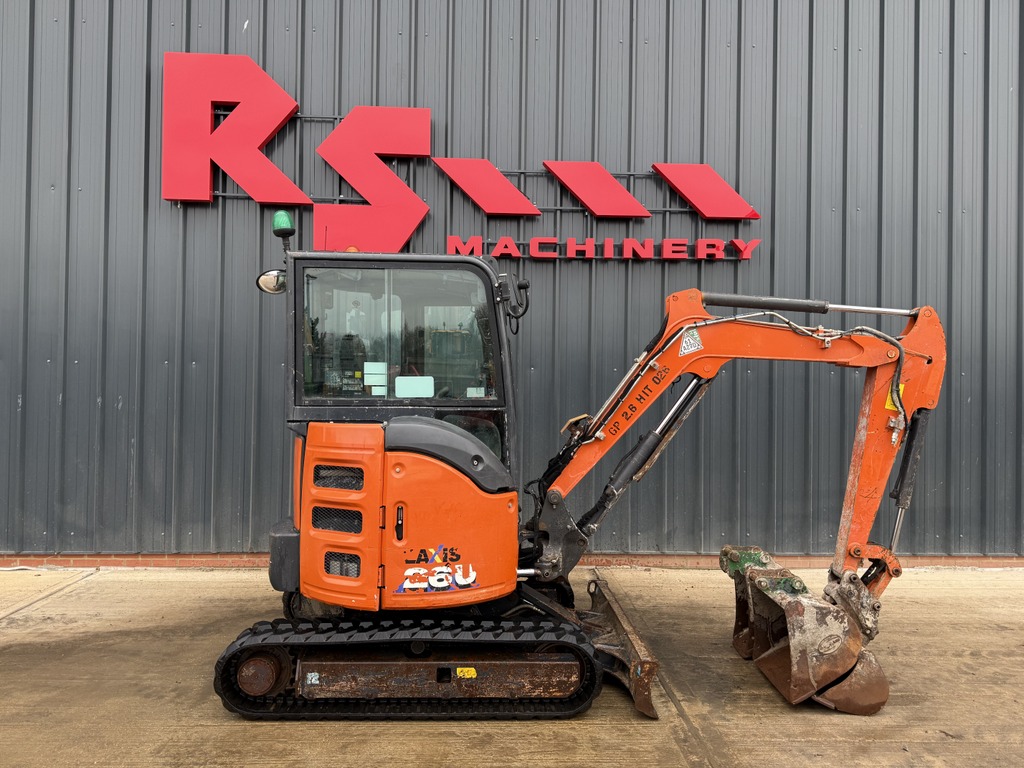
Hitachi ZX26 U-6 2.7t Mini Excavator
The Hitachi ZX26 U-6 2.7t Mini Excavator sits in that useful part of the excavator market where size, access and proper digging ability all have to work together. It is compact enough to get into the sort of places where larger plant starts causing headaches, yet substantial enough to be taken seriously on groundwork, landscaping, utility and general construction jobs. With a 2,720 kg operating weight, a full cab, twin speed tracks, hydraulic quick hitch, three buckets, auxiliary hydraulic circuit piping and a dozer blade, this is not a token small machine bought for the odd light task. It is the sort of excavator that can become part of the daily rhythm of a contractor’s work.
Anyone who regularly works around tight access will understand the appeal. A machine measuring approximately 4,100 mm long, 2,430 mm high and 1,500 mm wide has obvious advantages when yards are cluttered, gateways are narrow and the job is tucked behind a row of houses rather than laid out neatly on a spacious site. The 3-cylinder Yanmar diesel engine, rated at 15.6 kW, gives it the practical character expected from a modern mini excavator in this weight class, while the 2,730 mm maximum digging depth makes it capable of meaningful trenching, drainage preparation, foundation work and general excavation duties.
There is a reason machines of this size are popular with experienced operators. They do not try to replace larger excavators where reach, lifting capacity or heavy bulk digging are needed. Instead, they earn their keep by doing the awkward work efficiently: opening trenches where space is limited, cleaning up around structures, working inside gardens and courtyards, preparing ground in confined plots, or helping a small crew get through a day’s work without relying on barrows and a lot of swearing. On many jobs, that is worth a great deal.
Stworzony do pracy, z którą zmagają się większe maszyny
The Hitachi ZX26 U-6 is the type of compact construction equipment that makes sense when the site itself is the problem. Not every job offers wide access, dry ground and plenty of turning room. In real life, there are half-built extensions, soft verges, awkward farm tracks, garden walls, service trenches, tight urban plots and site entrances that appear to have been designed by someone who never expected machinery to arrive. In those conditions, a 2.7 tonne mini excavator often proves far more useful than a larger machine sitting outside the gate.
At 1,500 mm wide, this ZX26 U-6 has the sort of footprint that can make the difference between tracking directly to the work area and spending half the morning removing fence panels, shifting materials or finding another way in. That matters on domestic construction work, landscaping projects, small commercial sites and estate maintenance. The less time wasted on access, the more time the machine spends doing what it was brought in to do.
The dozer blade adds another layer of practicality. On small sites, an excavator is rarely asked to dig alone. It may need to tidy spoil, grade loose material, support backfilling, stabilise the machine during digging or make a rough access track passable enough to keep the job moving. A blade will not turn a mini excavator into a dedicated dozer, but operators know how often it saves a second machine, another pair of hands or a long session with a shovel.
Twin speed tracks are also worth having in the real world. Moving across a site, repositioning between work areas or travelling from one end of a farmyard to another all becomes less tedious when the machine is not crawling at the same pace all day. It is a small detail on paper, but on a long job it changes the feel of the machine. Most operators appreciate compact kit that does not become a burden by midday.
Muddy conditions are another familiar part of British site work. The ZX26 U-6 is not immune to poor ground, no compact excavator is, but a tracked machine of this size gives useful mobility where wheeled equipment or hand labour would quickly become frustrating. On wet ground, simple dependable machinery usually wins. Being able to dig, track, blade and reposition without overcomplicating the job is one of the reasons 2.7 tonne excavators remain so widely used.
To rodzaj maszyny, do której posiadania wykonawcy szybko się przyzwyczajają
The Hitachi ZX26 U-6 suits a broad range of buyers because it fits into so many working patterns. A groundwork contractor may use it for service trenches, drainage runs, foundation preparation and finishing work where a larger excavator has already done the bulk of the digging. A builder may want it for extensions, soakaways, reduced digs and awkward back-garden access. A landscaper may find it useful for pond work, retaining walls, levelling, path preparation, tree pits and moving material around confined areas.
For farms and agricultural businesses, this type of compact machinery can be particularly handy. Farm work is rarely tidy or predictable. One day might involve drainage repairs, the next clearing around a yard, maintaining tracks, digging out a post line or sorting a ditch edge. A machine like the ZX26 U-6 gives a farm the ability to deal with jobs promptly rather than waiting for outside plant to be available. That can be important when weather, livestock, access or timing all decide to become difficult at once, as they often do.
Estate owners and land managers can also make good use of a 2.7 tonne excavator. The relatively compact size helps around woodland tracks, garden areas, small bridges, outbuildings and boundary work, while the digging depth and bucket package make it more than a light landscaping toy. With three buckets included, the machine has the flexibility to move between narrower digging, general excavation and tidying or grading work without needing to source attachments immediately.
Plant hire firms may view the ZX26 U-6 differently again. Machines in this weight category are frequently requested because they are manageable, useful and familiar to a wide range of operators. The full cab, work lights, immobiliser and hydraulic quick hitch all support regular site use. A compact excavator that arrives with practical equipment already fitted is easier to put to work and easier for customers to justify hiring.
Utility contractors are another natural fit. Trenching, ducting, small reinstatement work and access-limited service jobs often need a machine that can work neatly without dominating the site. A maximum digging depth of 2,730 mm gives the ZX26 U-6 useful capacity for many utility-related excavation tasks, while the auxiliary hydraulic circuit piping leaves scope for compatible hydraulic attachments where the job calls for more than standard bucket work.
Dlaczego takie maszyny po cichu zarabiają na swoje utrzymanie
The value of the Hitachi ZX26 U-6 is not in one dramatic feature. It is in the combination of sensible size, capable digging performance and everyday usability. Many owners discover that this class of excavator gets used more often than expected, simply because it removes so much manual effort from small and medium-sized jobs. A trench that would have taken a gang a punishing morning can often be opened cleanly and quickly with the right operator. Spoil can be managed, levels adjusted and awkward corners dealt with before the day has run away.
The hydraulic quick hitch is a practical addition because it reduces the hassle of changing buckets. On paper, changing attachments is a simple task. On a wet, busy site, with spoil in the wrong place and another trade waiting to get in, it becomes one of those little delays that irritates everyone. A quick hitch helps the operator keep working efficiently, especially when swapping between digging, cleaning and shaping tasks through the day.
The inclusion of auxiliary hydraulic circuit piping improves the machine’s usefulness for buyers who may want attachment flexibility. Not every owner will use hydraulic attachments every week, but having the pipework already in place can be a major advantage when the work changes. It means the machine is not limited purely to bucket duties, provided any attachment is suitable for its size and hydraulic capability.
Operator comfort should not be dismissed either. The full cab gives protection from weather, wind and the general unpleasantness of a long day on an exposed site. British weather has a habit of turning a straightforward job into a character-building exercise by lunchtime. A cabbed compact excavator helps the operator stay more settled, which usually means steadier work and fewer mistakes as the day goes on. The fitted radio may not dig the trench, but anyone who has spent hours in a machine will know it does no harm at all.
The pin pad immobiliser is another practical ownership detail. Compact plant is valuable, movable and often parked on sites that are not as secure as anyone would like. Sensible security features matter, particularly for contractors moving between jobs or leaving machinery on site overnight. It is not glamorous, but it is the sort of thing owners think about after they have been in the trade for a while.
Work lights help extend practical usability in dull conditions, early starts and darker months. They are not there to encourage reckless working in poor visibility, but they are useful when finishing a task properly before leaving site. In winter, especially, the difference between getting a job tidied and leaving it half-done until morning can be significant.
Tam, gdzie ta maszyna sprawdza się najlepiej
The Hitachi ZX26 U-6 is well suited to jobs where control and access matter as much as raw output. On domestic building projects, it can work around extensions, drainage trenches, patio bases, retaining walls and service runs without overwhelming the site. Small plots often suffer from congestion, with materials, skips, scaffolding and trades all competing for the same few metres of space. A compact excavator with useful reach and digging depth can keep progress moving without needing the whole site rearranged every hour.
On groundwork projects, the ZX26 U-6 can take on trenching, trimming, backfilling support and smaller excavation duties alongside larger plant. This is where compact excavators are often most valuable: not replacing the bigger machine, but freeing it from fiddly work. While the larger excavator handles bulk movement, the smaller machine can tidy edges, work near structures, clean out areas and finish details that would otherwise slow everything down.
Landscaping work is another area where this machine makes good sense. Landscapers often deal with sites that have already been built around, fenced in, planted up or made awkward by previous work. A 2.7 tonne excavator can help shape ground, remove stumps, dig ponds, prepare levels and handle material without bringing in a machine that causes more disruption than the job justifies. It is the sort of plant that can turn hard manual work into a controlled mechanical task.
For farms, the machine’s usefulness lies in its flexibility. Drainage channels, yard repairs, ditch maintenance, track edges, fencing preparation and small earthmoving jobs all suit this type of excavator. Agricultural work tends to reward machinery that can be started, moved into position and put to use without a great deal of fuss. If a job needs doing before the weather changes, before livestock move or before another task takes priority, having a compact excavator available can be a real advantage.
Utility and service work can also suit the ZX26 U-6 well, particularly where the working area is restricted. Footway work, duct trenches, small reinstatement preparation and access-limited digging all benefit from a machine that can operate neatly. The 2,730 mm maximum digging depth gives a useful operating range for many practical trenching tasks, while the compact dimensions help reduce the disruption that larger plant can create in tight urban spaces.
There are also the less glamorous jobs that often justify ownership: digging out failed drains, clearing compacted material, loading small dumpers, tidying spoil heaps, preparing bases and sorting the areas nobody noticed until the programme started slipping. Some machines earn their place quietly simply by making awkward jobs easier, and this Hitachi sits firmly in that category.
Rodzaj maszyny, którą docenia się po długim dniu na budowie
Operators tend to judge compact excavators by how they feel after several hours, not by how they look in a yard. The Hitachi ZX26 U-6 has the practical features that matter when the day is long and the job is not especially forgiving. A full cab keeps the operator out of the worst of the rain and wind, which sounds obvious until you have spent a wet November morning trying to work accurately while everything outside turns to paste.
Visibility, comfort and straightforward operation all affect productivity. A compact excavator working close to walls, kerbs, services, fences or finished surfaces needs to be placed accurately and controlled smoothly. While the supplied information does not need dressing up with claims, the basic layout of a modern cabbed mini excavator gives an operator a far better working environment than open, exposed or older machines. You notice the difference after a full day on site.
The hydraulic quick hitch and three-bucket setup also reduce the stop-start nature of small excavation work. A narrow dig may need one bucket, cleaning out may need another, and grading or finishing may call for a wider option. When changing buckets is easier, the operator is more likely to use the right tool rather than making do. That is often what separates a tidy job from one that needs a labourer following behind for half the afternoon.
The machine’s dozer blade adds to that sense of usefulness. It can help stabilise the excavator while digging, push loose material, tidy working areas and support basic levelling. On cramped jobs, where bringing in extra plant is not practical, a blade can be a quiet time-saver. It is not the feature people talk about first, but it is often the one they would miss if it was not there.
Long shifts also expose machinery that is awkward to live with. If a machine is difficult to move around site, slow to reposition, uncomfortable in poor weather or limited by awkward attachment changes, those annoyances build up. The ZX26 U-6, with its compact size, twin speed tracking, cab, lights and working equipment, is set up for the sort of steady, practical use that operators generally prefer. No unnecessary drama, which is usually how the better days on site begin.
Maintenance and care are part of ownership too. While buyers should always inspect condition and service history carefully, choosing a recognised make such as Hitachi with a proven diesel engine arrangement is often reassuring for contractors who need dependable plant rather than experiments. A machine that can be serviced sensibly, transported between jobs and put to varied work has an easier time earning its place in a fleet.
Rozsądne dopasowanie dla kupujących myślących długoterminowo
Before buying the Hitachi ZX26 U-6, it is worth thinking honestly about the work it will be asked to do. A 2.7 tonne mini excavator is not the answer to every excavation job, and buyers should not expect it to perform like a much larger machine. If the regular workload involves heavy bulk digging, significant lifting or extended reach requirements, then a larger excavator may be more suitable. But for access-sensitive work, trenching, landscaping, farm duties, building support and general compact excavation, this size can be extremely practical.
Transport is another key consideration. At 2,720 kg, the machine sits in a weight class where buyers need to think carefully about trailers, towing limits, transport vehicles and attachment weight. It is compact, but it is still proper plant equipment and should be moved correctly. For contractors working across several sites, transport practicality can make a major difference to whether a machine is used regularly or left in the yard because moving it is too much bother.
Access restrictions should also be considered before purchase. The 1,500 mm width is useful for many tight sites, but buyers should measure the real gateways, routes and working areas they deal with most often. The difference between “it should fit” and “it definitely fits” can be an expensive one when a crew is waiting and the customer is watching from the kitchen window.
Terrain matters as well. The ZX26 U-6 is a tracked compact excavator and will suit many soft, uneven or confined conditions, but ground conditions still dictate how safely and efficiently any machine can work. Wet clay, steep banks, unstable edges and poorly prepared access routes all need proper judgement. A good compact excavator helps, but it does not remove the need for an operator who knows when to be careful.
Buyers should also think about the attachment package. This machine comes with three buckets, a hydraulic quick hitch and auxiliary hydraulic circuit piping, which gives it a useful starting point for varied work. For many contractors, that means it can go straight into typical digging and finishing tasks. If specialist attachments are planned, compatibility should be checked properly before committing.
Operator requirements are just as important as the machine itself. A cabbed mini excavator like this will appeal to operators who spend long periods working in poor weather, built-up areas or confined environments. Comfort, visibility, controls and general familiarity all affect the quality of the finished job. The right machine is not only the one that can technically do the work, but the one an operator can use accurately and consistently day after day.
Dostępne za pośrednictwem RS Machinery
This Hitachi ZX26 U-6 2.7t Mini Excavator is available through RS Machinery, with UK buyers welcome to enquire and export enquiries also accepted. Transport can be arranged at an additional cost, which is useful for contractors, farms and machinery buyers who need the excavator delivered to site, yard or onward shipping point. Further details can be found here: Hitachi ZX26 U-6 2.7t Mini Excavator – RS Machinery Blog.
For buyers looking for compact used machinery with genuine day-to-day value, this ZX26 U-6 is the sort of machine worth considering carefully. It has the size to get into awkward places, the equipment to handle varied work and the practical features operators tend to appreciate once the job has properly started. In the world of contractor equipment, that combination is often more useful than any amount of showroom gloss.


