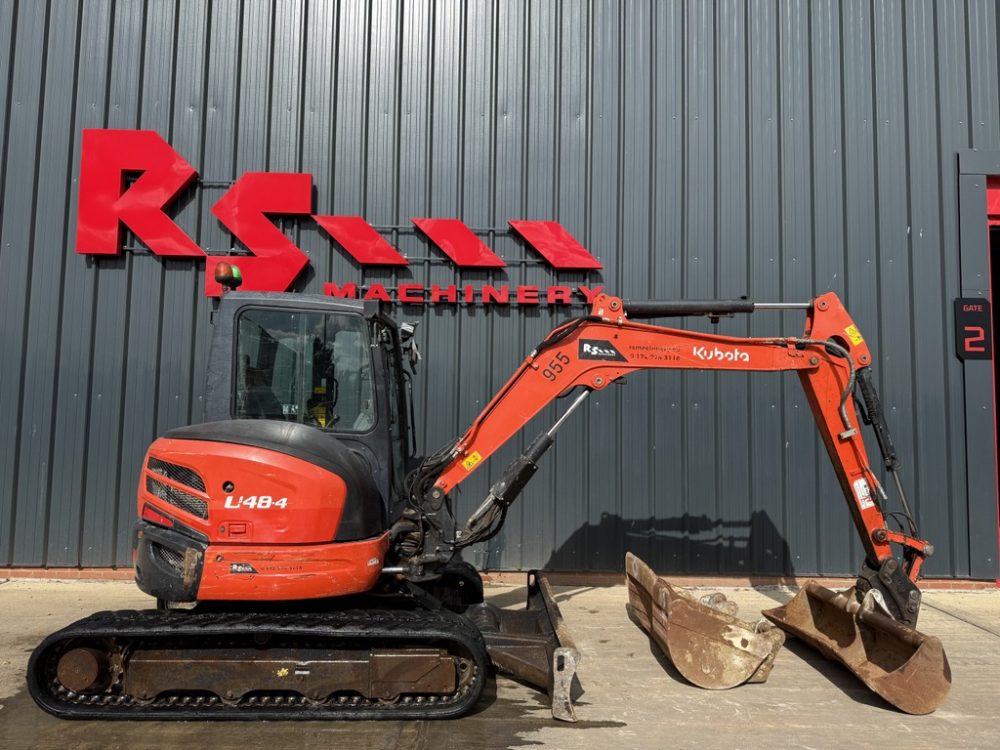
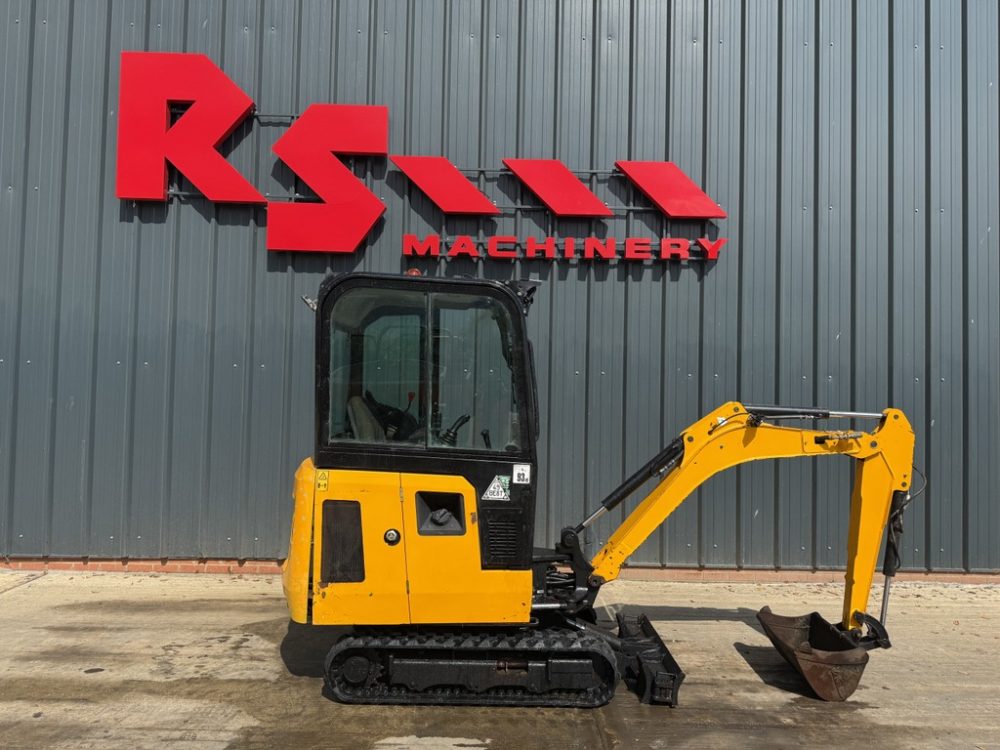
Tracked micro dumpers sit in a useful middle ground on UK sites: more stable and lower ground pressure than a wheeled barrow, but small enough to work through tight gates, along scaffold lines and around live trades. When you’re looking at second-hand units, the decision is rarely just about price — it’s about condition, documentation you can live with, and whether the dumper actually suits the access, tipping space and ground you’ve really got.
TL;DR
– Match the machine to access, turning space and tip height before chasing a bargain.
– Judge condition by tracks, rollers, hydraulics and slew/tip function, not paintwork.
– Ask for service history, hours and proof of ownership; walk away from vague paperwork.
– Plan delivery, handover and site controls so the first load doesn’t become the first incident.
Plain-English: what a tracked micro dumper is (and isn’t) on UK sites
Most tracked micro dumpers are compact, front-load machines designed to move spoil, aggregates and waste in places a 1–3t site dumper can’t comfortably go. They’ll often be asked to work on soft ground, gradients, temporary haul routes, and tight pedestrian interfaces where stability matters more than outright speed.
What they aren’t: a solution for long-distance hauling, high-cycle muckshift, or tipping into high-sided wagons without the right reach or skip configuration. Even within “micro” there are big differences in footprint, tip height, skip volume and whether the skip is a high-tip variant or a straight-tip. Those differences decide whether you’re clearing a trench line smoothly or constantly shunting to find a safe tip point.
Where used units make sense — and where hire still wins
Buying second-hand can suit firms that repeatedly need a micro dumper on small civils, landscaping, utilities reinstatement or housing plots where the machine is in and out most weeks. It can also make sense where you’ve got in-house fitters, or where downtime can be absorbed without programme pain.
Hire still tends to win when the job is short, access is uncertain, or you need a specific configuration (for example, a high-tip front skip to clear a bunker wall) without owning a niche variant. Hire can also simplify replacement if the dumper develops a fault mid-task, although that depends on availability and the hire terms.
A practical way to frame it is utilisation plus risk: if you’ll run it hard and can control maintenance, purchase can work. If you need flexibility, quick swap-out and minimal asset admin, hire often stays the calmer option.
A site scenario: why “used” decisions get made under pressure
A small refurb job in Leeds has a rear yard accessed through a 900mm passage, with scaffold up and a live footpath at the front. The ground is damp and patchy where the old slabs have come up, and the drainage gang is due on the same day as the skip exchange. The supervisor wants a tracked micro dumper to shift broken concrete and spoil from the back to a front skip without barrowing past joiners and sparks. A used unit turns up from a local seller with no ramps and a vague story about “recent service”. On the first run it slews oddly under load and the left track rides up on the edge of the temporary road plates. Work stops while they hunt for a competent operator, then again while they try to agree who’s responsible for a leaking hose. The job loses half a day and the footpath interface becomes harder to manage as materials stack up.
That’s not unusual: the machine might be small, but the consequences of poor condition, poor handover or poor site controls aren’t.
Staged pre-purchase approach for a second-hand tracked micro dumper
### Stage 1: Make sure the dumper fits the workface
Start with the boring constraints: gate width, tight corners, ground bearing, gradients, and where you need to tip. Measure the pinch points and confirm you’ve got a safe turn and tip area without swinging into pedestrians or stored materials. If you need to tip into a skip or over a kerb, confirm the dump height and reach; “high tip” means different things across models and can still fall short on site.
Noise and fumes matter too. If the machine will work in a partially enclosed courtyard or under a canopy, think about ventilation and whether you need to manage run times and idling more tightly.
Stage 2: Condition signals that matter more than cosmetics
Hours can help, but they don’t tell the whole story on small plant. A low-hour dumper that’s been driven on hardcore with poor tensioning can be worse than a higher-hour one that’s been maintained properly.
Focus on the undercarriage: track condition, cuts, missing lugs, uneven wear, roller noise, idler play, and whether track tension looks consistent. Then look at hydraulics — not just obvious leaks, but weeping around fittings, cracked hose outer skins, and any delay or judder when lifting/tipping. Run the machine up to operating temperature if possible; hot oil often reveals the real behaviour.
Controls and safety kit are not “nice to haves” either. Check that the operator presence features (where fitted), emergency stop arrangements and guards are present and not bypassed. A missing guard on a micro dumper tends to show the attitude the machine has lived with.
Stage 3: Paperwork and provenance you can stand over
For used purchases, the most common headache is not mechanical — it’s uncertainty. Ask for evidence of ownership and a clear sale trail, plus any service history, parts invoices and manuals. If it’s been used on hired-in work, you want to know whether it’s had regular inspections and whether faults were recurring.
It’s also worth asking what’s included: spare tracks, ramps, a charger if it’s battery electric, or a spare key. Small items are often the difference between a usable asset and a constant workaround.
Stage 4: Transport, handover and immediate site controls
Even the right machine causes problems if delivery is improvised. Confirm how it will arrive (flatbed, beavertail), who is providing ramps if needed, and where it can be safely offloaded without blocking neighbours or creating a new pedestrian conflict.
Plan a simple handover: who will operate it, where it’s permitted to run, where the exclusion zones are during tipping, and what the daily “park up” arrangement is to avoid theft and nuisance. If multiple subcontractors will be near it, make sure there’s no ambiguity about banksman/spotter responsibilities during reversing or tight manoeuvres.
Common mistakes
1) Buying purely on width and forgetting turning circle, tip arc and where spoil actually needs to land. The dumper fits through the gate but can’t tip cleanly without repeated shunts.
2) Treating track wear as cosmetic. Undercarriage issues quickly become downtime, especially once the machine hits wet clay or broken slab edges.
3) Accepting “serviced recently” without any supporting paperwork. Without dates, parts listed and who did the work, it’s just a phrase.
4) Letting the first operator “have a go” to keep momentum. Competence gaps show up fast on slopes and around pedestrians, and the machine takes the blame.
A quick on-the-spot buying checklist (usable at the viewing)
– Watch it start from cold and then re-start warm; note smoke, hesitation or uneven idle.
– Drive forward and reverse under load if possible; listen for clicking, grinding or track slip.
– Cycle the skip through full range; look for drift, judder and any twist in the hinge area.
– Inspect hoses and fittings closely; fresh oil can be a wipe-down, not a fix.
– Check undercarriage wear and track tension; uneven wear often points to misalignment or abuse.
– Confirm serial number/ID plate presence and match it to any documents supplied.
What to tighten before the next delivery or collection
If you’re hiring in, brief the delivery driver on access restrictions and where you want the machine placed to avoid dragging tracks across finished thresholds. If you’re collecting a purchase, make sure you’ve got the right loading method and tie-down points; improvised lashings and rushed loading are where small plant gets damaged before it ever reaches site.
On site, agree a simple traffic plan: one-way pedestrian route if possible, designated tip points, and a “no go” zone at the front of the skip during tipping. Micro dumpers often work right where people are — that’s exactly why the controls need to be explicit, not assumed.
The used market will stay attractive while programmes remain tight and budgets are under scrutiny, but condition and documentation habits are what separate a bargain from a nuisance. Watch for competence drift as teams change: the smallest machines are often the ones treated least formally, right up to the moment something goes wrong.
FAQ
Do operators need a ticket to use a tracked micro dumper on UK sites?
Many sites expect evidence of training/competence for plant, even for compact equipment, and some principal contractors set their own standards. Good practice is to match the operator to the machine type and the site risks (slopes, pedestrians, confined areas), and record who is authorised. If in doubt, treat it like any other item of powered plant and escalate early rather than after a near miss.
What should we sort out before delivery to a tight residential plot?
Confirm the delivery vehicle type, offload method and whether there’s room to position ramps safely. Walk the access route for width, overhead constraints and ground that could collapse under point loads at the threshold. Also decide where the dumper will be parked so it’s not left blocking egress or tempting theft overnight.
How do micro dumpers usually clash with other trades?
They often share space with scaffolders, groundworkers, brickies and labourers moving materials by hand, which creates pinch points. Problems appear at tip points (people stepping in to “help”), at blind corners, and during skip changes when everyone wants the same access. A named spotter/banksman arrangement during the busiest periods prevents a lot of friction.
What documents are worth asking for when buying used?
At a minimum, aim for proof of ownership, an identifiable machine serial/ID, and whatever service or inspection records exist. Manuals and parts information help your fitters and reduce guesswork on fluids and filters. If paperwork is vague, price the risk realistically or be prepared to walk away.
When should a supervisor stop the task and escalate a plant concern?
Stop and raise it if the dumper behaves unpredictably (steering pulling, track climbing, tipping drifting), if there’s a hydraulic leak that could affect control, or if guards/safety features appear missing or defeated. Also escalate if the workface forces unsafe manoeuvres, such as tipping into an area that puts people in front of the skip. Small plant incidents still derail programmes, so early intervention is usually the cheapest option.