


.
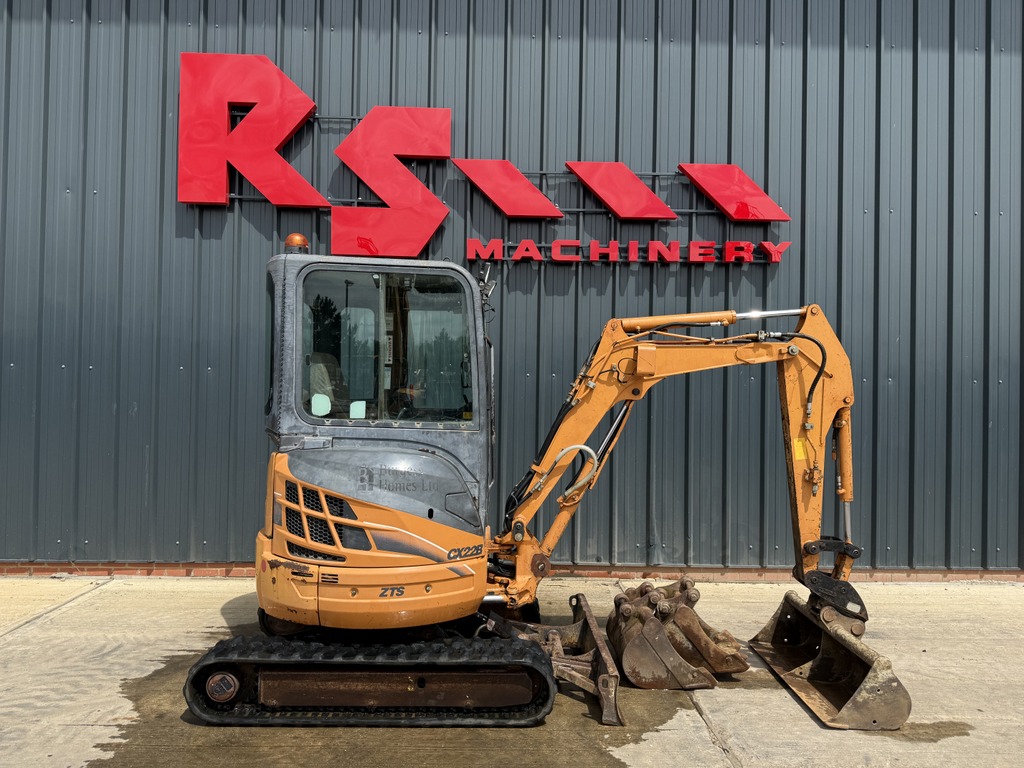
Case CX22B 2.5t Mini Excavator
The Case CX22B 2.5t Mini Excavator sits in that useful part of the machinery world where compact size still feels properly capable. It is small enough to make sense on awkward domestic jobs, tight commercial sites, farmyards, estates and restricted urban plots, yet it still has the weight, reach and hydraulic usefulness that operators expect from a proper excavator rather than a token site accessory.
At 2,500 kg, this Case CX22B has enough presence to work with confidence without becoming a nuisance to move, position or operate around other trades. The 3-cylinder Yanmar diesel engine, rated at 15.9 kW, gives it the sort of straightforward, dependable character that suits long days of digging, grading, trenching and tidying up. It is not a machine that needs to shout about itself. It is the sort of compact excavator that earns its place by getting into areas where bigger plant simply causes more trouble than it solves.
With a maximum digging depth of 2,300 mm, zero-tail swing, twin speed tracks, full cab, quick hitch, three buckets, auxiliary hydraulic circuit piping, work lights and a dozer blade, this Case CX22B is clearly set up for real site work rather than occasional light duties. Anyone who has spent time trying to get a larger excavator through a narrow gateway, around scaffolding, beside a boundary wall or into a back garden will understand the appeal before the engine is even started.
Stworzony do pracy, z którą zmagają się większe maszyny
There are plenty of jobs where a bigger excavator looks impressive on paper but becomes awkward in practice. Tight access, half-finished driveways, narrow lanes, built-up residential plots and busy construction sites all have a habit of making large machinery feel clumsy. The Case CX22B 2.5t Mini Excavator is far better suited to those situations, particularly where space is limited and there is little room for unnecessary tail swing.
The zero-tail swing design is one of the most practical features on this machine. On confined sites, it allows the operator to work closer to walls, fences, buildings and other obstacles without constantly worrying about the rear of the machine clipping something expensive. That matters on domestic landscaping jobs, utility trenches, extensions and farm buildings, where there is often less space than the drawings suggested and someone has usually parked a van exactly where it should not be.
Its overall dimensions of 3820 x 1400 x 2460 mm make it compact enough for restricted working areas while still offering a stable, usable platform for digging and grading. Width is often the difference between a machine that can get to the work and one that stays on the road while three people fetch shovels. In real terms, this size of excavator helps reduce hand digging, cuts wasted labour and keeps jobs moving when access is less than ideal.
The twin speed tracks add useful flexibility when moving around site. Slow, controlled tracking is valuable when positioning near trenches, kerbs, buildings or delicate surfaces, while the higher travel speed helps when crossing larger yards, developments or farm tracks. It is a small detail on paper, but operators notice these things over the course of a full working day.
The dozer blade gives the machine another layer of usefulness. It helps with backfilling, levelling, grading and stabilising the machine while digging. On wet ground or uneven sites, having the blade available makes the excavator feel more planted and more efficient. Simple, useful features like that tend to matter more in February mud than glossy brochure promises ever do.
To rodzaj maszyny, do której posiadania wykonawcy szybko się przyzwyczajają
A 2.5 tonne excavator like the Case CX22B appeals to a wide spread of buyers because it fits into so many working routines. Groundworkers can use it for drainage, footings, ducting and preparation work. Landscapers can put it to work on garden clearances, retaining walls, pond work, driveway preparation and shaping ground. Builders value this size of machine for extensions, small developments and renovation projects where access is usually tight and patience is often in short supply.
Farms and estates can also make very good use of a compact excavator of this type. There are always ditches to clear, tracks to repair, drains to expose, posts to work around, gateways to tidy and awkward corners of yards that need attention. Agricultural businesses often appreciate machinery that is easy to move between tasks without turning every small job into a major operation. The Case CX22B has that practical, everyday usefulness.
Utility contractors and small civil engineering teams may find the machine well suited to trenching and service work, particularly where larger excavators would struggle with access or where reinstatement and tidy working are important. The 2,300 mm digging depth gives it useful capability for a compact machine, while the zero-tail swing format helps when working alongside roads, footpaths, buildings and existing infrastructure.
Plant hire firms may also see the appeal. Compact excavators in this weight class are often in regular demand because they suit such a wide range of customers. They can go out to builders, landscapers, farmers, small contractors and private developments without being too specialised. A machine with a cab, work lights, quick hitch and three buckets is immediately more useful to a broad hire customer base than a bare machine with limited flexibility.
For owner-operators, the attraction is even clearer. This is the kind of excavator that can travel between varied jobs and still feel relevant. One day it may be opening a trench for drainage, the next it may be grading a garden, clearing material from a yard or working inside a tight plot where larger kit would be more hindrance than help. Some machines earn their keep not by doing one dramatic job, but by being useful almost every week.
Dlaczego takie maszyny po cichu zarabiają na swoje utrzymanie
The value of the Case CX22B 2.5t Mini Excavator lies in how many small frustrations it removes from daily site work. It reduces the need for hand digging, gives crews more control in confined areas and allows one operator to carry out work that would otherwise involve extra labour, more time and a fair amount of muttering. On compact jobs, the right machine does not just dig; it changes the pace of the whole project.
The Yanmar 3-cylinder diesel engine is a practical fit for this sort of excavator. Yanmar engines are widely respected in compact plant, and in a machine like this the emphasis is on steady, usable output rather than unnecessary complication. For buyers looking at used machinery, that matters. A compact excavator needs to start, work, idle smoothly, track reliably and do the same again tomorrow.
The quick hitch is another important working feature. With three buckets included, changing between digging, trenching and grading tasks becomes far more efficient. Operators do not want to waste half the morning wrestling attachments when the weather is closing in and concrete is booked for the afternoon. A quick hitch helps the machine adapt quickly to the job in front of it, which is often where compact machinery proves its worth.
Auxiliary hydraulic circuit piping adds further flexibility, depending on the attachments a buyer intends to use. For many contractors, auxiliary hydraulics are no longer a luxury; they are part of making a compact excavator more adaptable across different work. Whether the machine is being considered for hire, contracting, farm use or general construction work, hydraulic attachment capability broadens its practical appeal.
The full cab makes a noticeable difference in British working conditions. Open canopy machines have their place, but a cab is appreciated when the wind gets up, the rain starts coming sideways or the job carries on through a cold afternoon. Operator comfort is not just about making life pleasant; tired, wet operators do not work as efficiently or as carefully. You notice the difference after a long day on site.
Work lights add value during short winter days, early starts, late finishes and darker corners of sites or sheds. Again, it is not a glamorous feature, but it is useful. Much of the ownership appeal of this Case CX22B comes from that collection of practical details which make the machine easier to live with during normal work.
Tam, gdzie ta maszyna sprawdza się najlepiej
The Case CX22B is particularly well suited to jobs where access and control matter as much as outright digging capacity. On building sites, it can handle footings, service trenches, drainage runs, grading and material movement in areas where larger machines would be constantly repositioning or waiting for space. On smaller developments, that can make a real difference to workflow.
In landscaping, a 2.5 tonne excavator often becomes one of the most important machines on the job. It can remove old patios, shape gardens, dig out for retaining walls, prepare driveways, load dumpers and tidy levels before finishing work begins. The zero-tail swing design is helpful around fences, walls, mature planting and existing buildings, where careless movement can turn a straightforward job into an awkward conversation with the client.
For agricultural and estate work, the appeal is more varied. The machine can be used for ditch cleaning, track repairs, drainage, small excavations, yard improvements and general maintenance tasks. Farms rarely have the luxury of perfectly clean, level working areas. Mud, gateways, slopes and cluttered yards are part of the day. A compact excavator with a blade and twin speed tracks is well suited to that sort of environment.
Utility and service work is another natural setting. Compact excavators often find themselves working along boundaries, pavements, narrow roads, verges and tight compounds. The Case CX22B’s compact footprint and zero-tail swing layout help the operator stay productive without constantly having to reposition barriers, move materials or worry about nearby obstacles.
It is also the sort of machine that can be useful around yards and small depots. Loading loose material, cleaning up corners, scraping back ground, removing spoil and helping with minor repairs are all the jobs that are easy to ignore until they become a nuisance. Having a compact excavator available means those tasks can be dealt with properly rather than left for another wet Friday.
Rodzaj maszyny, którą docenia się po długim dniu na budowie
Good compact machinery is often judged most honestly at the end of the day, not at the start. When the operator has been in and out of trenches, tracking across uneven ground, changing buckets, working close to buildings and dealing with other trades, the small details matter. The Case CX22B 2.5t Mini Excavator has the kind of specification that supports real working days rather than just neat showroom descriptions.
The cab provides shelter and a more comfortable working environment when the weather is doing what British weather tends to do. On a cold, wet site, a cabbed mini excavator can make the difference between steady progress and a crew losing enthusiasm by lunchtime. Nobody does their best work while soaked through and pretending it is fine.
Visibility and control are important on compact jobs, especially when working near services, kerbs, walls, vehicles or people on foot. A machine in this class is often used in areas where there is very little margin for clumsy movement. The zero-tail swing layout helps reduce stress in those conditions, allowing the operator to focus on the bucket and the work area without constantly checking what the rear of the machine is doing.
The quick hitch and bucket set also reduce unnecessary effort. Operators appreciate being able to move from digging to grading without losing momentum. Over a full day, those time savings add up. They also help keep the job neater, because the correct bucket is more likely to be used when changing it is straightforward.
Maintenance and daily checks are part of ownership, even if they are rarely the most exciting part of buying machinery. Used plant buyers usually look for machines that are practical to inspect, sensible to service and not overly complicated for the work expected of them. This Case CX22B presents itself as a straightforward compact excavator with familiar components and a working specification that makes sense for contractors, farms and smaller construction businesses.
There is also something to be said for a machine that does not dominate the site. A 2.5 tonne excavator can work around other trades, move between tasks and get into positions where larger machinery would create disruption. On busy jobs, keeping things moving without constantly rearranging the entire site is worth more than it first appears.
Rozsądne dopasowanie dla kupujących myślących długoterminowo
For anyone considering this Case CX22B, the first question should be workload. If the work regularly involves restricted access, shallow to moderate digging, landscaping, drainage, farm maintenance, utilities or small construction projects, a compact excavator in this weight class can be a very sensible purchase. It offers a useful balance between capability and manoeuvrability.
Transport is another practical consideration. At 2,500 kg, buyers should think carefully about their towing, trailer and haulage arrangements, as well as the weight of buckets or additional attachments when planning movements. The appeal of compact machinery is often tied closely to how easily it can be moved between sites. A machine that is simple to transport gets used more often.
Access restrictions should also be considered honestly. The Case CX22B’s compact dimensions and zero-tail swing layout make it suitable for many confined jobs, but buyers should still measure gateways, paths, ramps and working areas rather than relying on guesswork. Machinery has a habit of finding the one tight corner nobody checked.
Terrain and ground conditions matter too. The dozer blade and tracked undercarriage help on uneven or softer ground, but every site is different. Wet clay, steep slopes, loose fill and recently landscaped areas all require judgement. A compact excavator is capable machinery, but it still rewards careful operation and sensible planning.
Attachment requirements are worth thinking through before purchase. The included three buckets and quick hitch give this machine a strong starting point for general excavation and grading work, while the auxiliary hydraulic circuit piping may support further attachment use depending on the buyer’s needs. Contractors who expect varied work should consider how the machine fits into their wider equipment setup.
Long-term ownership is rarely about one headline figure. It is about whether the machine suits the jobs that actually come in, whether operators are comfortable using it, whether it can be moved without drama and whether it helps reduce delays. The Case CX22B 2.5t Mini Excavator looks well aligned with the kind of practical, varied work many UK contractors, builders, landscapers, farms and estates deal with every week.
Dostępne za pośrednictwem RS Machinery
This Case CX22B 2.5t Mini Excavator is available through RS Machinery, with UK buyers welcome to enquire directly. Export enquiries are also welcome, and transport can be arranged at an additional cost for buyers who need help getting the machine to site, yard or port. Further details can be found here: Case CX22B 2.5t Mini Excavator – RS Machinery Blog.
For buyers looking for compact used plant equipment with genuine day-to-day usefulness, this Case CX22B is worth a close look. It brings together the features that matter on awkward sites: compact dimensions, zero-tail swing, a full cab, quick hitch, three buckets, auxiliary hydraulics, work lights and a dozer blade. In the real world, that combination is often what keeps small jobs tidy, efficient and profitable.


