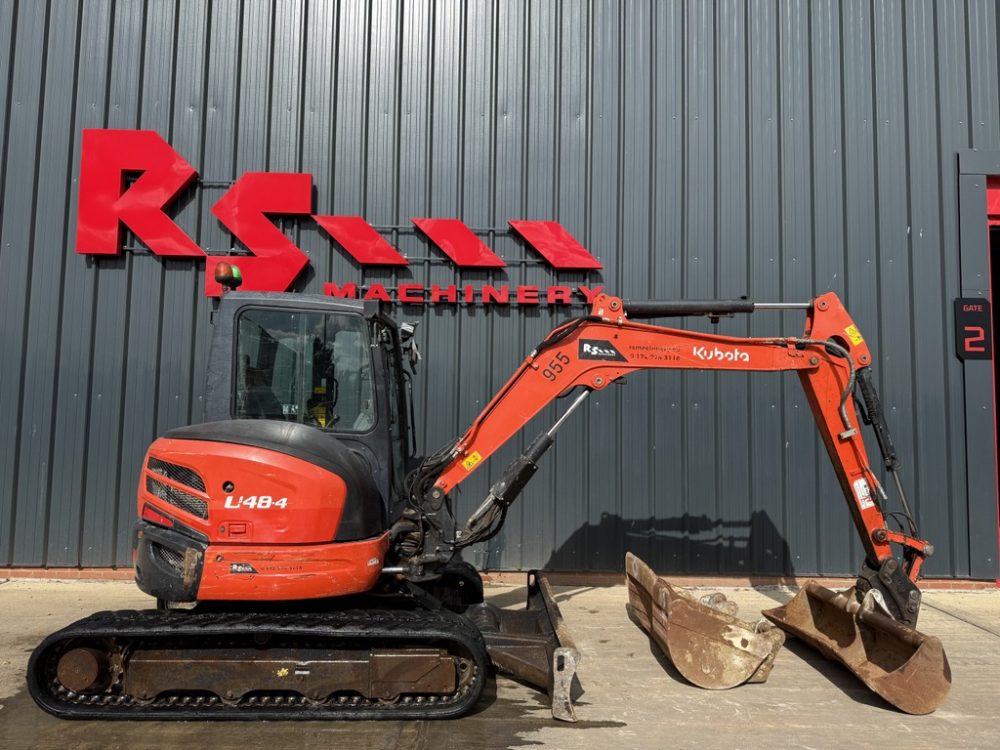
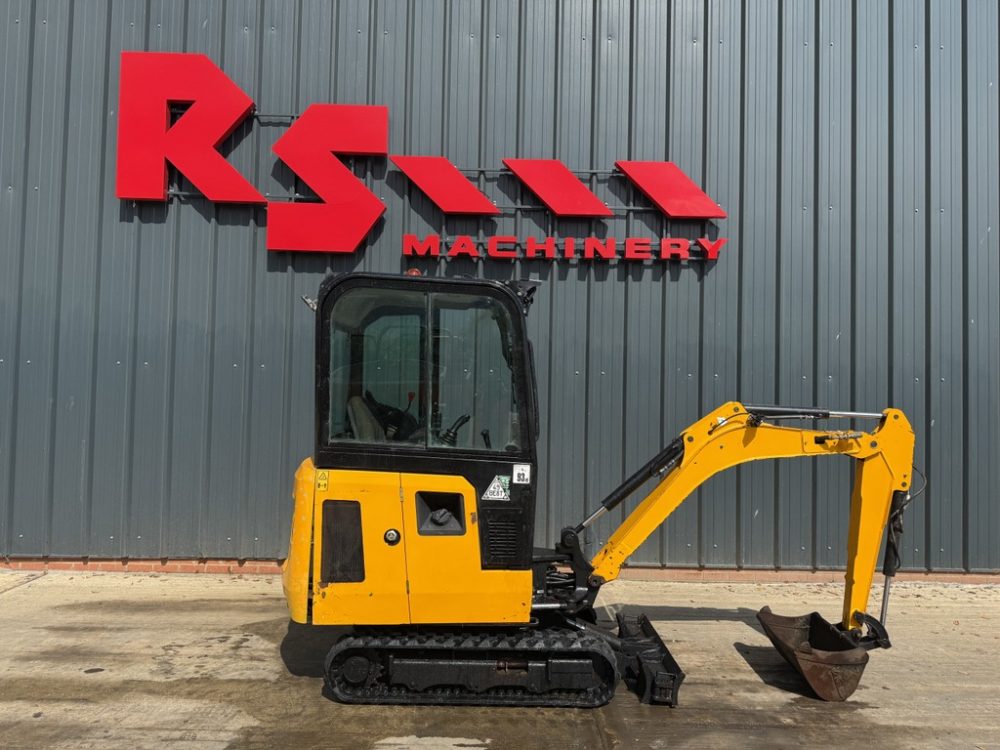
Buying a used mini excavator can be a sensible move on UK jobs where utilisation is steady but budgets are tight, yet it’s also one of the easiest places to inherit someone else’s downtime. The difference between a good buy and a headache is rarely the paintwork; it’s the paperwork trail, the wear patterns, and whether the machine actually suits your attachments, access and ground conditions.
TL;DR
– Treat a used mini digger as a package: machine, buckets/quick-hitch, delivery method, and documentation all need to line up.
– Prioritise evidence over assurances: service history, hour consistency, leaks, pins/bushes wear, and cold-start behaviour.
– Plan site logistics early: access width, ground bearing, spoil placement, and an exclusion zone that won’t fight other trades.
– If you can’t verify spec or history, price the risk in or walk away; hire can be the cheaper “certainty” when programme risk is high.
What a used mini excavator purchase really looks like on UK sites
A used mini digger often gets bought to take pressure off hire spend on small civils, utilities tie-ins, drainage, kerb lines, and plot works. The reality is it’ll be asked to do a bit of everything: trenching in mixed ground, grading, lifting the odd manhole ring, and tracking across surfaces you’d prefer to keep unmarked.
That variety is exactly why “dealer-prepped” needs unpacking. A tidy machine that starts and digs still might be the wrong weight class for your trailers, the wrong tail-swing for your access, or the wrong hydraulics for your attachments. Good decisions happen when the buyer talks about site workfaces and constraints, not just “a 1.5-tonner with buckets”.
How to read a dealer offering without getting lost in the listing
In the UK, used stock is advertised with a mix of hours, year, weight class, and optional extras. The useful part isn’t the headline hour count; it’s whether the specification is complete enough to match to your work.
Look for clarity on:
– Operating weight range (especially if you’re moving it behind a pickup and plant trailer)
– Tail swing type (zero/short tail matters on tight refurb and street works)
– Quick-hitch type and bucket pin sizes (and whether buckets are included and actually fit)
– Auxiliary hydraulics (single/double acting, pedal/roller control, and any case drain line if you run certain attachments)
– Tracks (rubber vs steel, condition, and whether you’ll be working on finished surfaces)
If details are vague, don’t fill in the gaps yourself. Ask for photos of data plates, hitch markings, and the actual buckets laid out, not just a stock picture.
A short site scenario: when “it’ll do” collides with the programme
A small refurbishment in a live commercial yard needs a mini excavator to trench for new drainage and a duct run. The dealer delivery turns up mid-morning, just as a grab lorry is trying to get in and a scaff team is offloading. The mini digger is a short tail model as requested, but the quick-hitch doesn’t match the buckets brought from the last job, so the supervisor starts hunting for pins and an adaptor. The operator can get it running, but there’s a slight hesitation on the auxiliary circuit and a damp patch under the slew ring after tracking into position. With the trench line set out, the temptation is to “crack on and sort it later”, but the exclusion zone keeps being breached because the yard traffic plan wasn’t updated for the excavator’s swing area. By lunchtime, the workface is blocked, and the job is paying for plant that can’t safely work at pace.
Paperwork and provenance: what “good enough” evidence looks like
A used mini excavator dealer should be able to provide a coherent story: where it’s come from, what’s been done to it, and what condition it’s in now. You’re not looking for perfection; you’re looking for consistency.
Useful indicators include service invoices, stamped service records, and evidence of recent consumables (filters, oils, tracks, sprockets) that align with the hours shown. Hour meters can be replaced, so sense-check wear: pedals, joystick gaiters, seat base, slew play, bucket linkage and track wear should “agree” with the claimed hours.
If the machine is being sold with lifting in mind, ask what documentation is available for lifting points and any lifting accessories supplied. Separately, for working on site, it’s normal to align with PUWER expectations around suitability and maintenance, and to ensure whoever operates it is competent for the machine and task. None of that needs to be adversarial; it’s simply how you protect the programme and the people around the workface.
One practical pre-purchase checklist (keep it on the phone)
– Cold start it and watch for smoke, uneven idle, or hunting; warm machines can hide problems.
– Run all hydraulics to end of travel: boom, dipper, bucket curl, slew both ways, dozer blade, and auxiliary flow under load if possible.
– Inspect pins and bushes for play, plus cracks around the boom foot, dipper, and hitch area; fresh paint around welds deserves questions.
– Look underneath for fresh oil, wet hoses, and rubbed-through lines; check the slew ring area for weeping and grit build-up.
– Confirm hitch and bucket compatibility by measurement, not assumption; match pin diameter and centres, and identify the hitch type.
– Verify transport plan: machine weight, trailer capacity, tie-down points, and whether site access allows safe offload without blocking others.
Controls that keep you out of trouble once the machine lands
Even when the purchase is sound, most headaches arrive on day one: access, interfaces, and expectations. A used mini digger that’s “fine” in the yard can struggle when it’s asked to track across made ground, work near services, or swing inside a narrow exclusion zone.
Časté chyby
1) Assuming any bucket will fit any quick-hitch. Mismatched pin sizes and centres lead to wasted time, unsafe bodges, or running without a hitch when pressure is on.
2) Treating delivery as a drop-and-go. Without a clear offload point and traffic control, you create conflict with other deliveries and pedestrians immediately.
3) Ignoring auxiliary hydraulic requirements for attachments. A breaker, auger, or grab can expose weak pumps or missing case drain lines, and the first sign is often overheating or sluggish performance.
4) Letting the machine work without a proper handover and defect note. Small leaks and intermittent electrics become “normal” until they become downtime on a critical day.
How to intervene early: keep momentum without shortcuts
If you’re supervising or managing plant, the best intervention is to make the first shift predictable. Get the operator to do a deliberate warm-up and functional run-through in a controlled area before the machine goes near the trench line or other trades. If something is off, you want it discovered while you still have space, time and daylight to isolate it.
Set the workface up so the excavator can be productive without constant re-positioning. That means deciding where spoil goes, where materials get staged, and where pedestrians and vehicles can pass without walking into the swing area. On tight sites, a banksman/spotter isn’t “nice to have” when reversing and swing overlap with live routes is unavoidable.
Čo treba utiahnuť pred ďalšou zmenou zmeny
Operator changes and late-day push are where small issues become incidents. Make it routine that any leaks, unusual noises, warning lights, or slow functions are written down and passed on, not just mentioned in passing. If you’re running attachments, keep a note of which couplers and hoses were used and whether anything ran hot or vibrated.
For buyers, build a simple “baseline condition” record once the machine arrives: photos of undercarriage, hoses, cab, hour meter, and buckets/hitch. It’s not about blaming anyone; it’s about knowing what’s changed when something deteriorates.
Hire versus buy: when certainty beats ownership
There are weeks where owning a used mini excavator is the right call, and weeks where hire is the sensible insurance policy. If the job is on a fixed programme with liquidated damages pressure, limited access windows, or a high-risk interface with the public, the value of a replacement machine and responsive support can outweigh the day rate difference.
Buying makes more sense when you can keep utilisation steady across multiple sites, you have someone accountable for daily care, and you can absorb a day’s downtime without taking out the critical path. If you’re buying to avoid hire, be honest about whether you’re also taking on maintenance planning, parts sourcing, and transport responsibility—because you are.
The market pressure to “just get something in” tends to rise when workloads spike and availability tightens. What to watch next is competence drift (new operators, unfamiliar hitches/attachments) and documentation habits that get sloppy as teams move fast.
ČASTO KLADENÉ OTÁZKY
Do operators need a specific ticket to use a mini excavator on UK sites?
Many UK sites expect proof of training/competence for excavator operations, often via recognised schemes, but the key is that the operator is competent for the machine size and the task. For a used machine new to your fleet, a short familiarisation on controls, hitch operation, and any quirks is good practice. Site rules may also dictate what evidence is acceptable at induction.
What should I confirm about delivery and access before a used mini digger turns up?
Confirm the delivery vehicle type, turning space, and a safe offload point that doesn’t clash with other deliveries or pedestrian routes. Measure tight gates and consider ground conditions where the machine will track off the wagon. If the only offload area forces reversing or swing into live traffic routes, plan a banksman/spotter and temporary controls.
How do I avoid attachment and quick-hitch compatibility problems?
Don’t rely on “standard” descriptions—measure pin diameters and pin centres, and identify the hitch type from markings or clear photos. If you run specialist attachments (breaker, auger, grab), confirm the auxiliary hydraulics and any case drain requirements. On handover, physically couple and uncouple each bucket/attachment to prove it works without forcing pins or latches.
What paperwork is worth asking for when buying used plant in the UK?
Ask for service history evidence (invoices, service records), details of any recent repairs, and a clear note of what is included in the sale (buckets, hitch, keys, manuals). If you’ll be lifting with the excavator or using lifting accessories, ask what documentation is available to support safe use and inspection routines. Keeping a baseline condition record on arrival helps manage maintenance and resale later.
When should a supervisor stop the job and escalate a plant issue?
Escalate when there’s a safety-impacting defect: uncontrolled movement, hydraulic leaks that create slip/fire risk, hitch that won’t lock consistently, warning lights you can’t explain, or instability on the ground you’re working. Also escalate if the exclusion zone can’t be maintained because of site traffic or overlapping trades. Stopping early is usually cheaper than recovering from an incident or a breakdown mid-pour or mid-connection.